
The Hidden Connection: How Foundation Issues in Louisiana & Mississippi Wreak Havoc on Your Roof
Foundation problems in Louisiana and Mississippi directly damage your roof by twisting the home’s frame, which creates gaps, cracks, and structural failures that lead to leaks and premature roof replacement.
As a Gulf South homeowner or property manager, you know the usual suspects when it comes to roof damage: hurricanes, hail, and the relentless sun. But what if the biggest threat to your roof isn’t coming from the sky, but from the ground beneath your feet? In Louisiana and Mississippi, the unstable soil can cause your foundation to shift, creating a domino effect that silently compromises your entire roofing system. At Priority Roofing, we’ve seen this hidden connection firsthand. Since 2012, our locally owned and operated team, led by founder Sean Killeen, has specialized in diagnosing and solving the complex roofing challenges unique to our region, from New Orleans to Biloxi. With over 50 years of combined construction experience, we understand that your property is a complete system, and we have the expertise to protect it from top to bottom.
Key Takeaways
- Foundation to Roof Connection: Shifting foundations in Louisiana and Mississippi transfer stress through your home’s structure, causing roof decking to warp, rafters to pull apart, and flashing to fail.
- Local Soil is the Culprit: The Gulf South’s expansive “gumbo” clay soil, combined with high humidity and subsidence, creates constant ground movement that puts both residential and commercial properties at risk.
- Warning Signs are Subtle: Look for interior signs like drywall cracks and sticking doors, as well as exterior roof issues like sagging ridge lines or gaps around chimneys, which can indicate a foundation-related problem.
- A Proactive Approach Saves Money: Investing in a comprehensive roof inspection and a high-quality roofing system can help manage water around your foundation, preventing more catastrophic and expensive structural repairs down the line.
TL;DR
Foundation problems in the Gulf South cause your home’s frame to twist and settle, which directly leads to roof leaks, structural damage, and premature failure. Identifying the connection early with a professional inspection is key to preventing costly, system-wide repairs.
How Can a Shifting Foundation Damage a Perfectly Good Roof?
A shifting foundation damages a roof by transferring immense stress throughout your home’s frame, causing rafters to separate, decking to warp, and the roofing system to ultimately fail. Even a subtle shift in the ground can create a chain reaction that travels from the concrete slab all the way up to your shingles or TPO membrane. This movement pulls structural components in opposite directions, creating gaps and weak points that water will inevitably find and exploit, leading to leaks that seem to have no obvious source.
The Domino Effect: From Soil to Shingles
Think of your home’s frame as a single, interconnected skeleton. When one part of the foundation sinks or heaves, it doesn’t happen in isolation. It pulls on the wall studs, which in turn pull on the ceiling joists and roof rafters. This twisting force, known as torsion, is incredibly powerful. It can cause the sheets of roof decking to buckle or separate, creating an uneven surface that compromises the integrity of the shingles or membrane laid on top.
Understanding Structural Stress Points
Your roof is designed to handle downward pressure from rain and wind, not the upward and sideways forces from a shifting foundation. The most vulnerable points are the connections: where rafters meet the walls, where the ridge beam runs along the peak, and around any penetrations like chimneys, skylights, or vents. As the frame shifts, these areas are the first to show strain. Flashing that was once watertight can pull away from a chimney, and seals around vent pipes can break, creating direct paths for water intrusion.
Why a Small Shift Causes Big Problems
You might not even notice a half-inch drop in your foundation, but your roof will. Over the span of a 40-foot roof, a small settlement at one corner can translate into significant gaps and misalignments at the peak. This is why homeowners are often baffled by persistent leaks; they hire a roofer who patches a shingle, but the real problem is the constant, subtle movement of the entire structure. A qualified Gulf Coast roofer with deep construction knowledge understands how to spot these systemic issues.
What Warning Signs Indicate My Roof Damage is Caused by the Foundation?
The most common warning signs are interior diagonal drywall cracks near corners, sticking doors or windows, and exterior roof issues like a sagging ridge line or separating flashing. These symptoms, especially when appearing together, often point to a systemic structural problem rather than isolated roof problems. A trained eye can distinguish between typical wear and tear on your roof and the tell-tale signs of a larger issue originating from below.
Interior Clues: Cracks Above Doors and Windows
Before you ever see a water stain on your ceiling, your interior walls may be sending distress signals. As the house frame twists, stress concentrates at the weakest points in the drywall—typically the corners of door and window frames. Look for:
- Diagonal cracks running from the top corners of doorways.
- Doors that suddenly stick or don’t latch properly.
- Windows that become difficult to open or close.
- Cracks where the wall meets the ceiling.
Exterior Red Flags: Gaps, Separations, and Brick Cracks
Walk around the outside of your property. The evidence of foundation movement is often in plain sight if you know what to look for. Pay close attention to:
- “Stair-step” cracks in brick or masonry walls.
- Gaps forming between the chimney and the siding.
- Caulking around windows and doors that is pulling away or cracking.
- Porches or patios that are pulling away from the main structure.
Roof-Specific Symptoms: Beyond Normal Wear and Tear
While things like granule loss or minor wind damage can be normal, foundation-related issues present differently. A roofer from a company like Priority Roofing, with over 50 years of combined construction experience, can spot the difference.
| Symptom | Typical Roof Wear | Potential Foundation Issue |
|---|---|---|
| Ridge Line | Straight and level | Appears wavy, bowed, or sagging in the middle |
| Shingles | Random missing or curled shingles | Entire sections look buckled or wavy |
| Flashing | Minor rust or sealant wear | Large, visible gaps between flashing and brick/siding |
| Leaks | Located near a clear point of damage | Persistent, hard-to-find leaks with no obvious source |
Why Are Homes in Louisiana and Mississippi Uniquely at Risk?
Homes in this region are uniquely at risk because the Gulf South’s expansive clay soil, combined with high moisture levels and regional subsidence, creates a perfect storm for foundation movement. Unlike in other parts of the country, our “gumbo” soil swells dramatically when wet and shrinks when dry, causing constant upward and downward pressure on foundations. For property owners from the North Shore of Louisiana to Gulfport, MS, understanding this local challenge is the first step in protecting your investment.
The Challenge of “Gumbo” Soil
Gumbo Soil: A local term for the expansive clay soil common throughout Louisiana and Mississippi. This soil has a high capacity to absorb water, causing it to swell significantly in volume during wet periods and shrink and crack during dry spells.
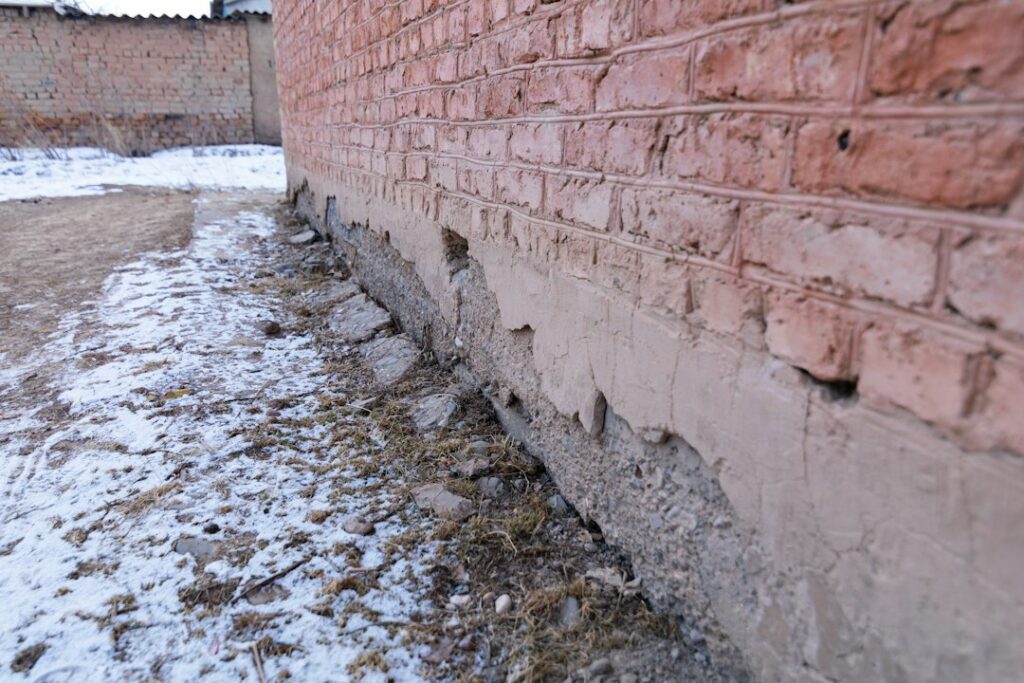
This constant cycle of expansion and contraction exerts incredible force on a home’s foundation. During a dry summer, the soil can shrink away from the slab, causing it to settle and crack. After a heavy rain, the soil swells, pushing upward with enough force to lift sections of the foundation, a process known as “heaving.” This relentless movement is the root cause of the structural stress that travels up to your roof.
Humidity, Saturation, and Foundation Stress
The Gulf South’s near-constant high humidity means our soil rarely dries out completely, keeping it in a perpetual state of partial saturation. This is compounded by intense rainfall events that can quickly oversaturate the ground around your home. Poor drainage, clogged gutters, or downspouts that deposit water right next to the foundation create zones of super-saturated soil, leading to uneven movement and putting immense stress on both your foundation and, consequently, your roof.
Local Expertise for Local Problems in New Orleans, Baton Rouge, and Biloxi
A contractor from another state simply won’t understand these unique ground conditions. A New Orleans roofer knows the challenges of building on reclaimed swampland, while a Mandeville roofer understands the specific soil composition of the North Shore. This is why choosing a locally owned and operated company is non-negotiable. A team that has spent years working in places like Baton Rouge, Slidell, and Biloxi has seen these foundation-related roof issues countless times and knows how to diagnose them correctly.
How Do These Foundation Issues Affect Commercial Flat Roofs?
On commercial buildings, foundation settling directly affects flat roofs by disrupting their precise slope, which leads to ponding water, seam separation, and costly business interruptions. Even a minor change in the building’s level can create low spots where water accumulates, adding thousands of pounds of weight, accelerating the degradation of TPO or modified bitumen roofing materials, and risking tenant safety or inventory damage.
The Dangers of Ponding Water
Ponding Water: Any water that remains on a flat roof for more than 48 hours after rainfall.
Commercial flat roofs are not perfectly flat; they are engineered with a slight slope to direct water toward drains. When a building settles, this slope can be compromised or even reversed. Water then collects in these new low spots. This standing water adds immense weight, which can lead to structural sagging. Furthermore, it magnifies the sun’s UV rays, rapidly breaking down the roofing membrane and leading to premature failure and leaks. A proactive commercial roof maintenance plan is essential to catch these issues early.
TPO and Membrane Stress at the Seams
As a commercial building shifts, its large, continuous roof membrane is stretched and pulled. This stress is most pronounced at the seams where sections of TPO, PVC, or modified bitumen are welded or adhered together. Foundation movement can pull these seams apart, creating long, linear failures that allow massive amounts of water to enter the building. This is a critical concern for any commercial roofing contractor working in the Gulf South.
Protecting Your Business, Tenants, and Inventory
For a property manager or business owner, a roof leak isn’t just an inconvenience—it’s a direct threat to the bottom line. Water intrusion can damage inventory, create unsafe slip-and-fall hazards for employees or tenants, and potentially lead to mold growth and business shutdowns. Recognizing that a persistent flat roof issue might be tied to foundation settlement is key to finding a permanent solution, not just another temporary patch.
What is the First Step to Diagnosing a Foundation-Related Roof Problem?
The first step is to schedule a comprehensive inspection with a trusted, local roofing expert who understands how a home’s foundation and roof interact as a single system. A roofer who only looks at the shingles will miss the bigger picture. You need a team with deep construction knowledge that can identify the root cause of the problem, not just patch the symptoms. This is where a contractor’s local reputation and experience become non-negotiable.
Why a Roofer’s Perspective is Crucial
While you may need a foundation specialist for the ultimate repair, a knowledgeable roofer is your first line of defense. They are in the unique position to see the end result of the structural shifting. A roofer who understands construction can identify the patterns of damage on the roof that point directly to a foundation cause. This holistic diagnosis prevents you from spending money on a series of failed roof repairs when the source of the problem lies elsewhere.
The Priority Roofing Promise: Local, Trusted, and Guaranteed
As a company rooted in the Gulf South since 2012, Priority Roofing has built its reputation on solving the toughest local roofing challenges. We aren’t just shingle installers; our team’s 50+ years of combined construction experience means we see the whole house. We understand the soil in St. Tammany Parish, the subsidence in Orleans Parish, and the coastal challenges in Harrison County. We provide a diagnosis you can trust.
Avoiding “Storm Chasers”: The Value of a 2-Year Repair Warranty
After a storm, our area is flooded with out-of-town contractors who are unfamiliar with our unique ground conditions. They might offer a quick fix, but they won’t be around when the real problem resurfaces. A local company like Priority Roofing stands by its work. Our 2-year warranty on roof repairs provides peace of mind and demonstrates our commitment to the community and to providing a lasting solution.
Can a New Roof Help Protect My Home’s Foundation?
Yes, a professionally installed roofing system with proper drainage is your first line of defense in protecting your foundation by preventing water from oversaturating the volatile soil around it. By effectively managing rainwater and directing it far away from your home, you reduce the extreme swell-shrink cycle of the clay soil. This proactive investment not only protects your roof but also adds critical stability to the ground supporting your entire structure.
Investing in Prevention for Maximum ROI
The cost to repair a failed foundation can be astronomical. By comparison, investing in a high-quality roofing system with robust gutters and downspouts is one of the most effective preventative measures you can take. By keeping the moisture level in the soil around your home as consistent as possible, you minimize the movement that leads to structural damage. It’s a classic example of an ounce of prevention being worth a pound of cure.
The FORTIFIED Advantage: Long-Term Protection and Insurance Savings
For Gulf South homeowners, upgrading to a FORTIFIED Roof offers an even higher level of protection. This building standard strengthens the entire roofing system, but it also includes requirements for sealed roof decks, which provide a superior water barrier. This can be a lifesaver if foundation shifting creates a vulnerability, preventing a small leak from becoming a major interior disaster. Plus, a FORTIFIED designation can lead to significant savings on your homeowner’s insurance premiums.
Affordable Solutions: Exploring Your Financing Options
We understand that a new roof is a significant investment. However, viewing it as a protective measure for your entire home—including the foundation—highlights its true value. To make this crucial upgrade accessible, reputable roofing companies offer flexible financing options. This allows you to protect your most valuable asset without depleting your savings, turning a large expense into a manageable monthly payment.
Don’t Let a Hidden Problem Destroy Your Biggest Investment
Your home or commercial property is an interconnected system. A problem at the foundation will inevitably reveal itself at the roof. Ignoring the warning signs—or hiring a contractor who doesn’t understand this hidden connection—can lead to a cycle of frustrating and expensive repairs that never address the source of the issue.
As a locally owned company with over a decade of experience serving communities from the West Bank of New Orleans to Ocean Springs, MS, Priority Roofing has the expertise to see the whole picture. We don’t just fix leaks; we diagnose the source of the problem to provide a lasting solution that protects your entire investment. Our deep roots in the Gulf South and our comprehensive construction background mean we’re uniquely equipped to handle the challenges our volatile soil throws at us.